
Mindfulness meditation is a simple way to practice noticing the present without immediately judging or changing it. For beginners, the useful skill is not forcing a quiet mind, but recognizing when attention wanders and choosing where to return. A few minutes of steady, gentle practice can build awareness you can use in conversations, decisions, and everyday stress.
Key points to remember
- You do not need to stop thoughts or achieve a special state.
- Choose one anchor, such as breathing, sound, or contact with the floor.
- Noticing distraction and returning is the practice, not a mistake.
- Begin with a short, repeatable session and adjust it to your needs.
- Meditation may support well-being, but it is not a substitute for professional care.
What mindfulness meditation is, and what it is not
Mindfulness meditation is training in present-moment attention with an attitude of openness. You can notice breathing, physical sensations, sounds, emotions, and thoughts without needing to label them as good or bad. The American Psychological Association’s definition similarly describes attention to breathing and to thoughts, feelings, and sensations as they arise.
This is not the same as emptying your mind, suppressing difficult feelings, or staying calm throughout a session. You might notice irritation, a grocery list, or a passing car. The practice is to recognize what is happening, then decide whether to return to your anchor.
Awareness can also create a small pause between an emotion and a response. That pause matters in daily life: it may help you hear another person more fully or notice when a quick reaction is shaping a choice. Different approaches to meditation emphasize different aims, as explored in this comparison of mindfulness and another meditation framework.
How to start with a five-minute practice
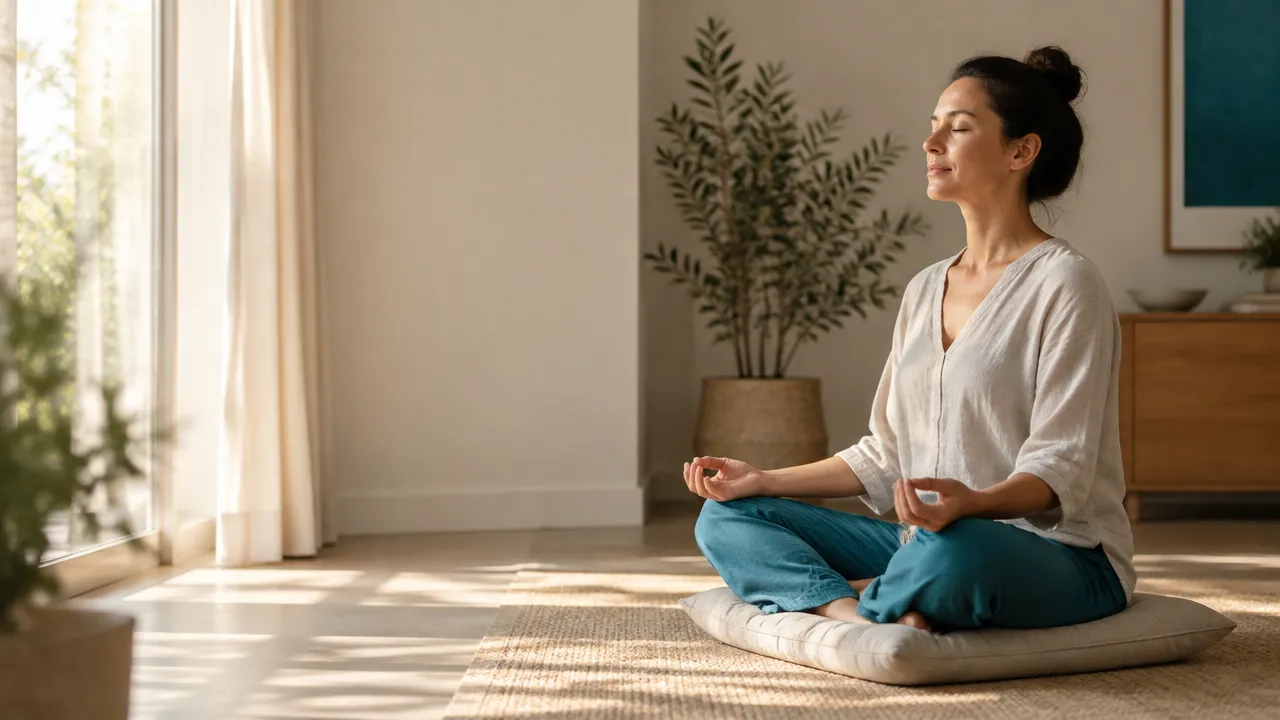
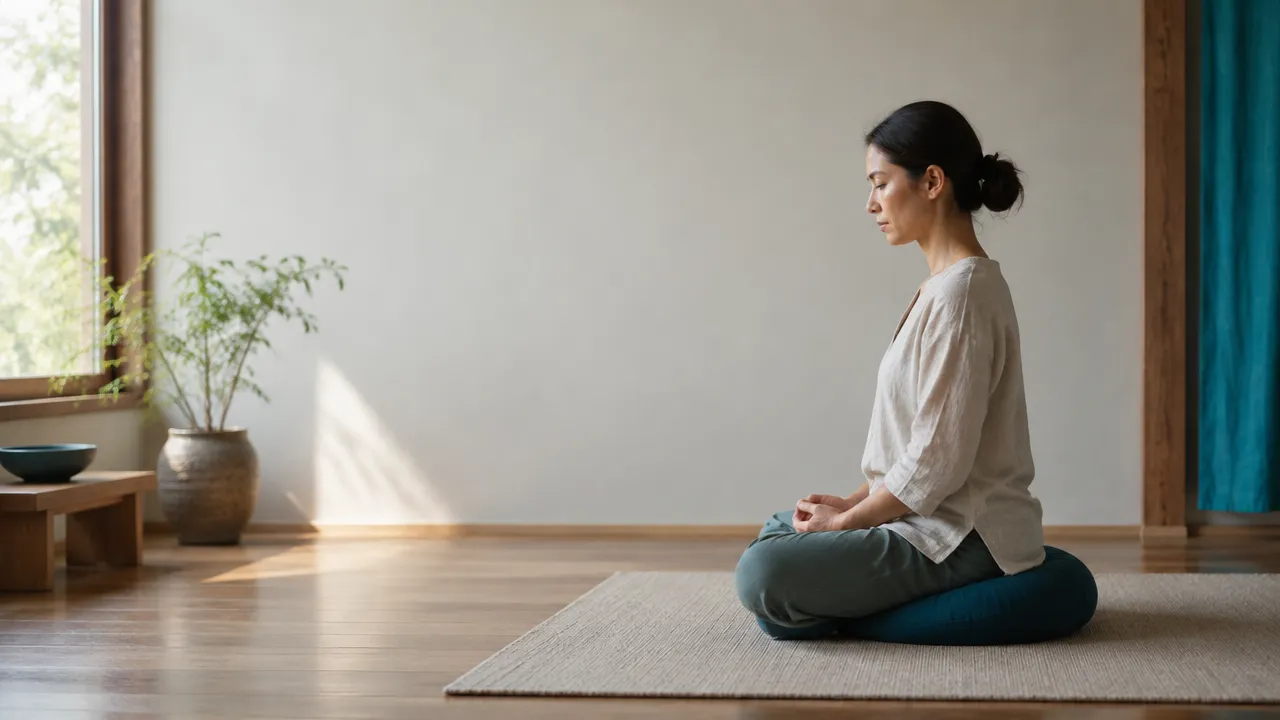
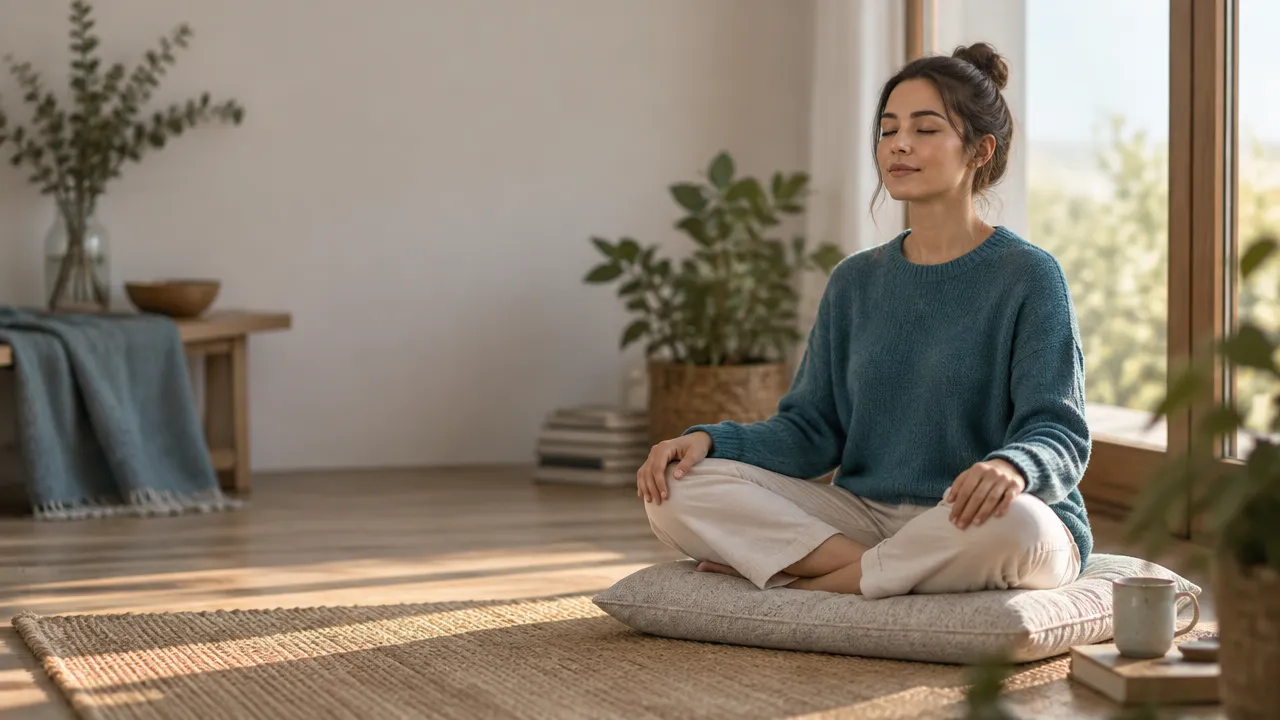
A short session is enough to learn the basic rhythm. Sit in a chair or on a cushion, with your posture comfortable and alert. Keep your eyes open or closed, whichever feels steadier, and set a gentle timer for five minutes.
- Choose an anchor. Notice the breath at the nose, chest, or belly. If breath focus feels uncomfortable, use sounds or the feeling of your feet on the floor.
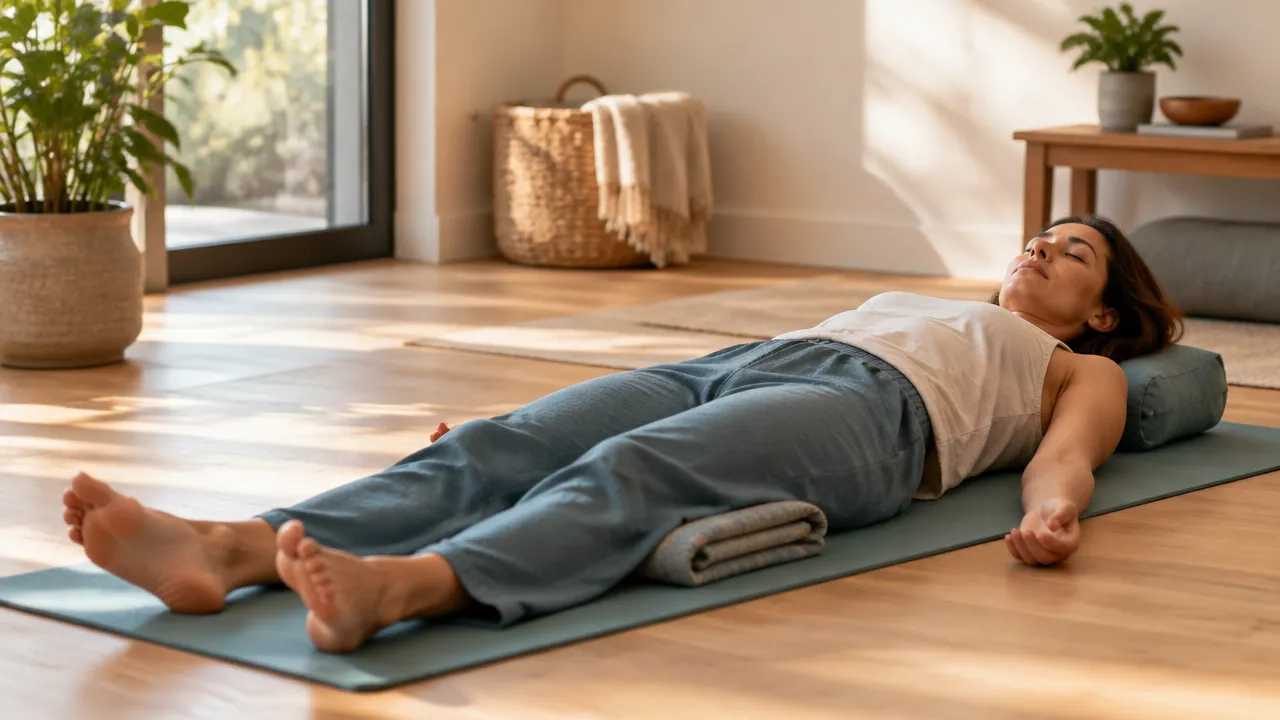
- Settle into the body. Feel the support beneath you and let your shoulders soften without forcing a particular posture.
- Notice what appears. When a thought, sound, or sensation takes your attention, acknowledge it simply.
- Return without scolding yourself. Bring attention back to your anchor as gently as you would guide someone who had lost their place.
- End deliberately. Notice how you feel, then choose one ordinary next action, such as standing up or beginning work.

When you are ready, add a minute or two rather than demanding a long session. A beginner’s meditation guide from the NHS also emphasizes that a wandering mind is a natural part of practice.
What should you do when your mind wanders?
Notice the distraction, name it lightly if helpful, and return to the anchor. Thinking is not proof that you are bad at meditation. Each time you recognize that attention has drifted, you have an opportunity to practice awareness and redirect it.
Try a quiet mental note such as “planning,” “remembering,” or “hearing.” Keep the label brief, then reconnect with the next breath or sound. Avoid turning the label into a story about why you should not be thinking.
If the breath feels too intense or brings up discomfort, switch to an external anchor. Listen to a steady sound, look softly at one spot, or feel your hands resting on your legs. If you miss practice for a while, a small restart is more useful than self-criticism; these ideas for restarting a meditation routine can help you make the return manageable.
What benefits can beginners reasonably expect?
Mindfulness may help some people relate differently to stress, anxious thoughts, and difficult emotions, but results vary and it is not a guaranteed treatment. The National Center for Complementary and Integrative Health summarizes research suggesting mindfulness-based approaches can help with anxiety and depression, while noting limits in the evidence and differences among practices.
Keep expectations practical: meditation is not a promise to erase stress, fix every problem, or make you calm on demand. It is a way to practice noticing experience and responding with more choice. For health concerns, keep working with qualified care providers rather than using meditation as a replacement.
Safety deserves the same realistic approach. NCCIH reports that a 2020 review of 83 studies involving 6,703 people found negative experiences in some studies, with the review estimating about 8 percent of participants experienced a negative effect. Anxiety and depression were among the commonly reported effects. If practice feels persistently distressing, stop or adapt it and seek guidance from a qualified professional. Read the agency’s summary of meditation evidence and safety for more context.
How can you make the habit sustainable?
Attach meditation to something you already do instead of waiting for a perfect time. Practice after brushing your teeth, before opening your laptop, or when you sit down for lunch. Keep the first goal modest, such as five minutes on four days this week.
- Use the same cue and place when convenient, but stay flexible.
- Track whether you showed up, not whether the session felt peaceful.
- Try one mindful moment during a routine activity, such as washing a cup or walking to a meeting.
- Shorten or change the practice if it becomes uncomfortable or hard to sustain.
Formal sitting is only one way to practice. A mindful pause before replying to a message, for example, can help you notice your reaction and consider its effect on another person. For ideas beyond a seated session, explore these small daily awareness practices.
Frequently asked questions
What is mindfulness meditation?
Mindfulness meditation is a practice of paying attention to present-moment experience, such as breathing, body sensations, sounds, or thoughts, with curiosity rather than immediate judgment. When attention wanders, you notice and gently return to your chosen focus. The aim is awareness, not a blank mind or a particular mood.
What are the five basics of mindfulness practice?
Five useful foundations are choosing an anchor, noticing what is happening, allowing experience without judging it, returning attention when it wanders, and practicing with patience. They are practical reminders rather than a strict universal formula. Start with a few minutes and adapt the anchor if focusing on your breath feels uncomfortable.
How do I clear my mind during meditation?
You do not need to clear your mind to meditate. Thoughts will arise; notice that your attention has followed one, then gently return to your chosen anchor. You can label the thought quietly as “planning” or “remembering,” without arguing with it or treating it as a failure.
How long should a beginner meditate?
Start with five minutes at a time, once a day or several times a week, and choose a cue you can repeat, such as sitting after breakfast. Consistency matters more than a long session. If you miss a day, simply resume with the next small practice instead of trying to make up for it.
Is mindfulness meditation safe for everyone?
Mindfulness practices are generally considered to have few risks, but some people may experience distress or other difficult reactions. If meditation increases anxiety, painful memories, or a sense of disconnection, stop or shorten the session and try an external anchor. Seek qualified support if distress continues, and do not replace medical care with meditation.