

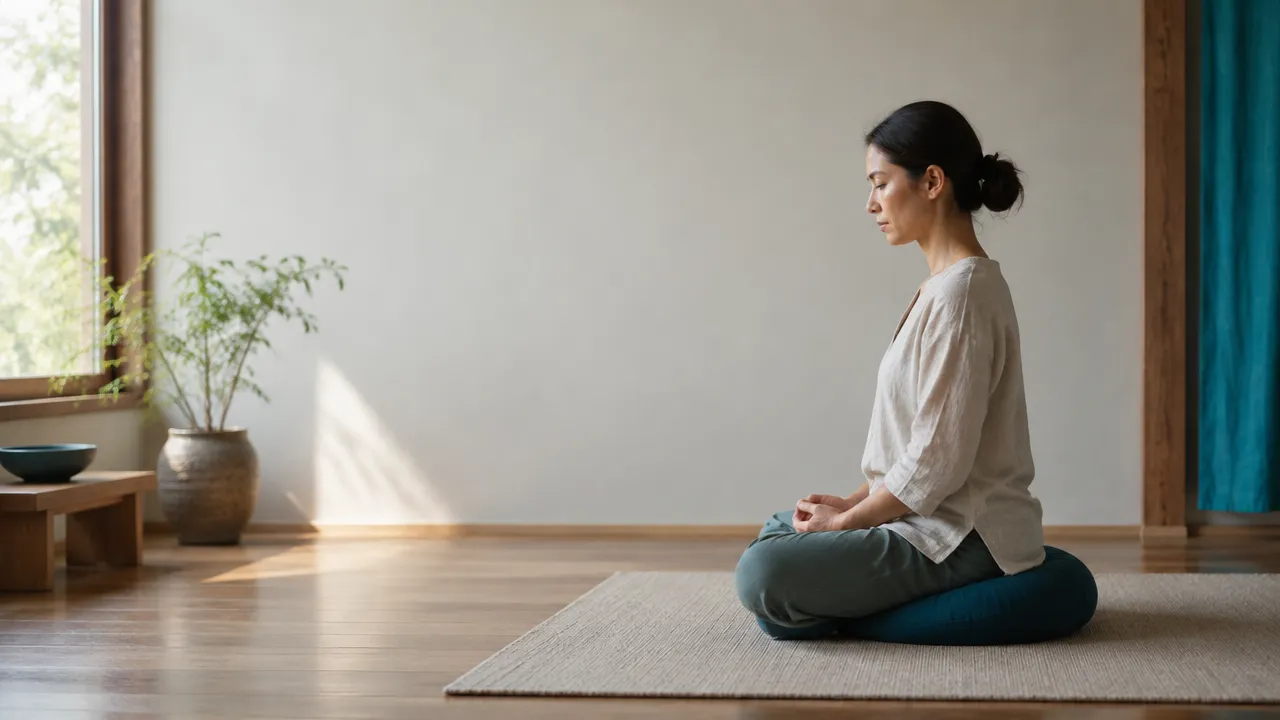
Zen meditation, commonly practiced as zazen, is seated attention that asks you to meet each moment without trying to manufacture a particular experience. Beginners can start with a stable seat, relaxed upright posture, and a short session. The practical aim is not to stop thinking, but to notice thoughts and return to sitting.
Key points for a first zazen session
- Choose a posture you can maintain without sharp pain, including a chair if needed.
- Keep your back naturally upright, shoulders soft, and gaze lowered.
- Let breathing happen naturally; use breath counting only if it fits your instruction.
- When attention wanders, notice it and return without scolding yourself.
- Begin with five to ten minutes and build a steady routine before extending it.
What is zazen, and what happens during practice?
Zazen means seated meditation in Zen Buddhism. In many Soto Zen settings, practitioners are taught to sit with open awareness rather than pursue a specific mental result. Other Zen communities may teach breath counting or another focused method. Follow one set of instructions at a time, since methods and details vary among schools.
During a session, you sit and experience what is present: breathing, sounds, bodily sensations, and thoughts. Attention will move. The practice is to recognize that movement and return to your chosen anchor, or simply to sitting, without treating distraction as failure.
This makes zazen different from a relaxation exercise with a promised outcome. Calm may arise, but it is not a test of whether you are doing it correctly. A useful way to think about practice is as training in awareness that can also inform how you respond to other people and circumstances.
How should you set up your posture?
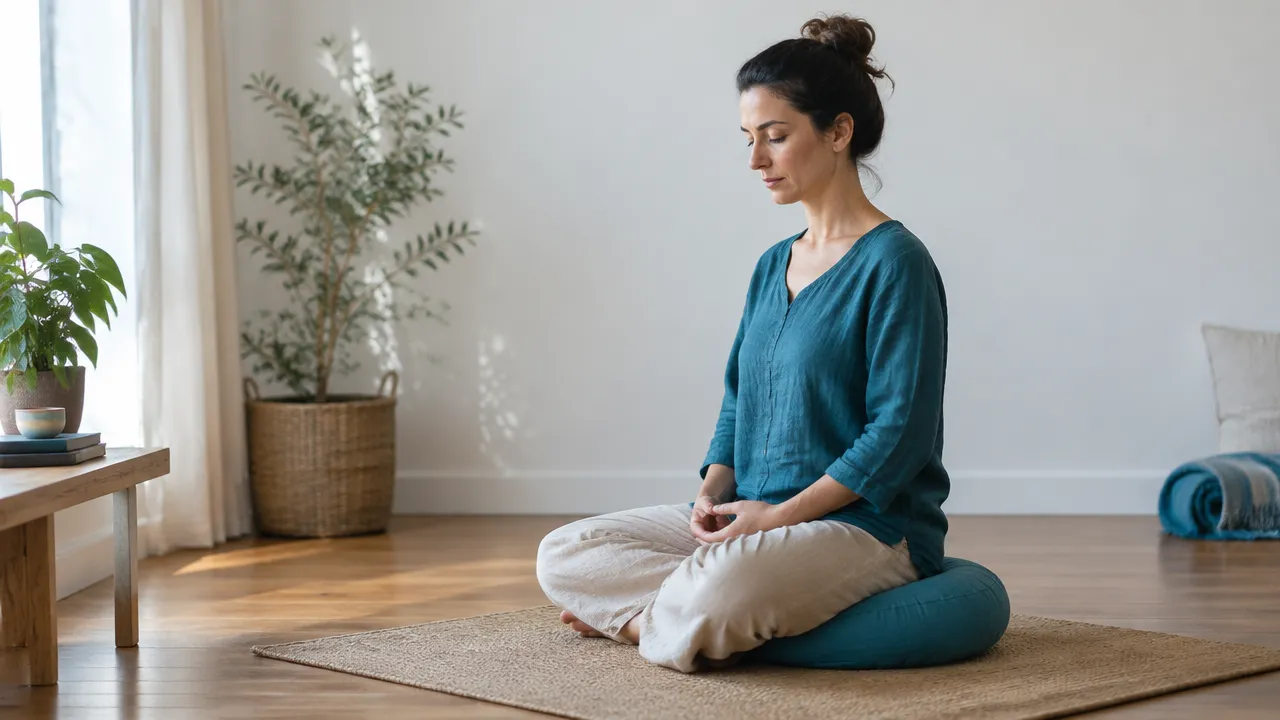
Comfortable stability matters more than achieving a formal-looking pose. Sit near the front of a firm cushion, kneel on a meditation bench, or use a chair with both feet supported. Let the pelvis tip slightly forward so the spine can rise without stiffening.
- Place your hands comfortably in your lap, following the hand position taught in your chosen tradition.
- Keep your shoulders relaxed and chin slightly tucked, without forcing your neck.
- Lower your eyes toward the floor rather than closing them if that is part of your instruction.
- Shift position if you feel sharp pain, numbness, or strain.
The Soto Zen instructions for zazen offer a tradition-specific reference for sitting. Treat posture as adaptable rather than a contest in endurance. Paying attention to the body's cues during meditation can help you distinguish ordinary restlessness from discomfort that calls for adjustment.
How do you work with breathing and thoughts?
Let the breath remain natural unless your teacher has given you a specific breathing method. You might feel the movement at the abdomen or the air near the nose. When thoughts pull you into planning or replaying a conversation, recognize what happened and return gently to the present.
Some Zen instructions use counting breaths to steady attention, often restarting at one after losing track. Others emphasize open awareness, without holding tightly to a single object. Do not mix several methods just because one session feels difficult. Consistent, simple practice makes it easier to notice what the instructions are asking you to do.
Breathing is an anchor, not a demand to breathe deeply or slowly. If attention to breath feels uncomfortable, widen awareness to include contact with the seat or sounds in the room. Different approaches to meditative breathing can provide context, but use the method recommended by your Zen teacher when following a specific tradition.
What is a simple beginner routine?
A short, repeatable routine makes it easier to begin without turning meditation into a performance goal. Try this sequence for five to ten minutes:
- Choose a quiet place and set a gentle timer.
- Sit in a stable position and make one or two small posture adjustments.
- Rest your attention on sitting, natural breathing, or the method your teacher taught.
- When distracted, acknowledge it and return without judging the session.
- When the timer ends, pause, stretch if needed, and stand slowly.
Practice a few times each week before adding minutes. A brief session you can return to is more useful than an ambitious plan that leaves you tense or discouraged. If you join a group, ask how its tradition handles posture, timing, and attention so your home routine supports rather than contradicts that guidance.
How can sitting practice shape everyday awareness?
Zazen is practiced while sitting, but its value can also be tested in ordinary interactions. After a session, notice whether you can pause before reacting, listen without preparing a rebuttal, or recognize how fatigue shapes your judgment. These are small opportunities to bring steadier attention into relationships, not proof of spiritual achievement.
That transfer matters in an interdependent world, where personal reactions affect families, workplaces, and communities. Meditation does not automatically make someone ethical or emotionally mature. It can, however, create a moment to notice an impulse and choose a more considered response. Practices for more mindful communication offer practical ways to carry attention into conversation.
Frequently asked questions
What is the purpose of zazen?
The purpose of zazen is to practice attentive, non-grasping presence, not to force a special mood or erase thought. Sitting gives you a steady way to notice your body, breath, and mental activity as they arise. Zen schools may explain the practice differently, so a teacher can clarify the approach you are following.
Can you practice zazen by yourself?
Yes, you can begin zazen on your own with a quiet space, a stable seat, and a short, regular routine. A qualified teacher or group can help you check your posture and understand a particular Zen tradition. If sitting causes pain or distress, adjust your position or seek guidance instead of pushing through.
How should a beginner sit for zazen?
Sit on a cushion, bench, or chair that lets your pelvis tilt slightly forward and your spine remain naturally upright. Relax your shoulders, keep your hands settled in your lap, and lower your gaze. Choose a position you can sustain without sharp pain, and make small adjustments when needed.
Do you need to clear your mind during Zen meditation?
No. Zazen does not require an empty mind. Thoughts, sounds, and feelings will appear; the practice is to notice them without chasing or suppressing them, then return attention to sitting. If your tradition uses breath counting, resume the count gently after noticing that attention has wandered.
How long should a beginner practice zazen?
Start with five to ten minutes, several times a week, and increase the duration gradually if your body and schedule allow. Consistency matters more than forcing a long session. A timer can help, but choose a gentle sound and finish by standing slowly, especially after sitting cross-legged.