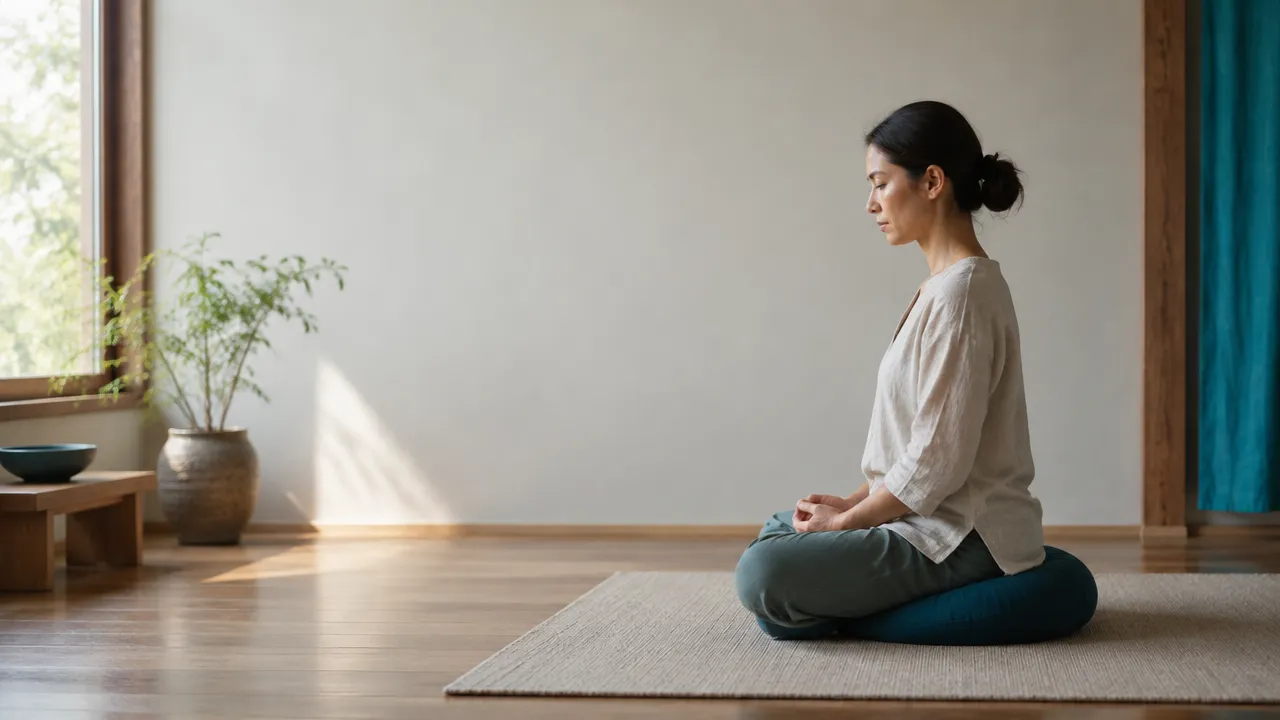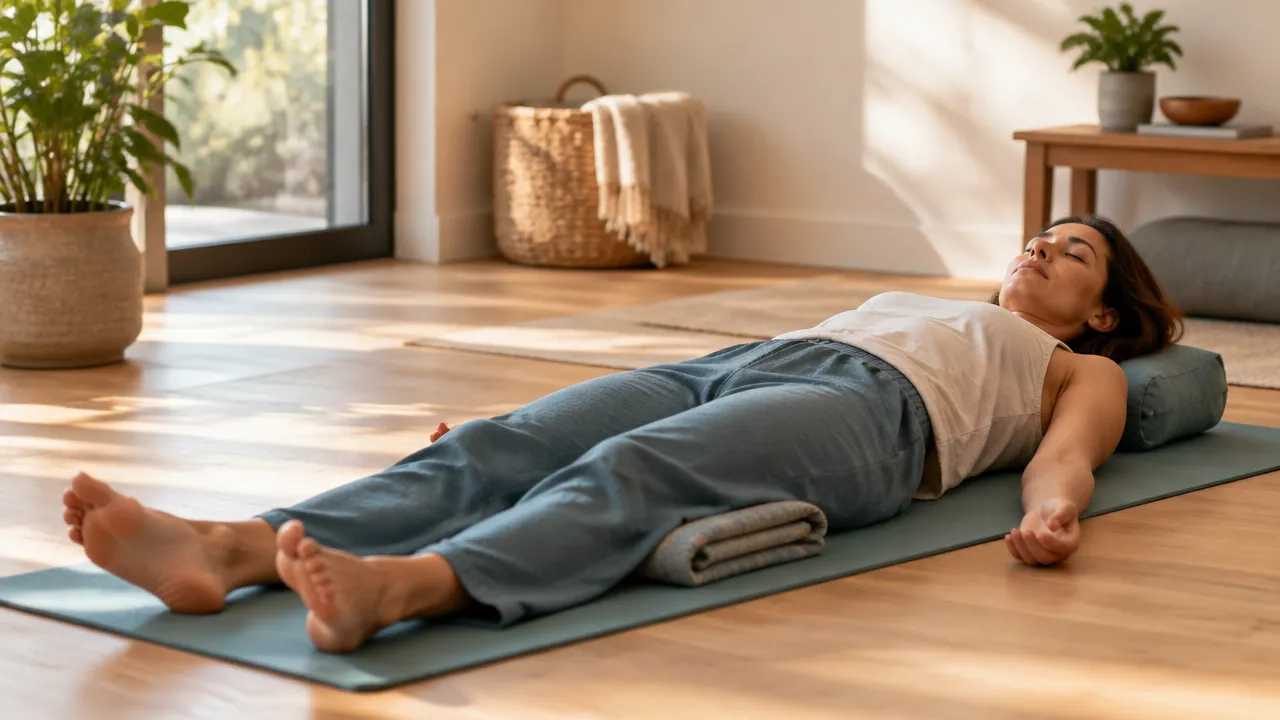

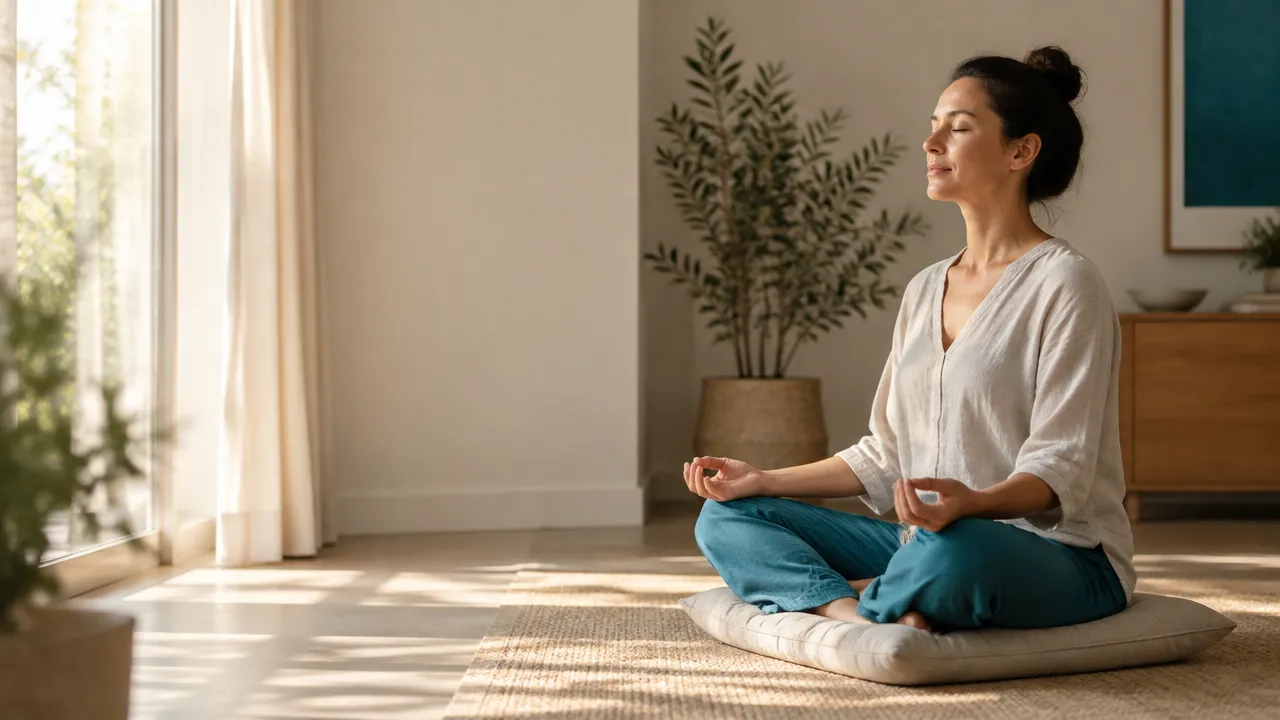
Mantra meditation uses the repeated sound of a word or short phrase to steady attention. It can suit beginners who find silence distracting, as well as experienced meditators looking for a simple practice they can carry into daily life. Start with a few minutes, choose words you understand, and treat wandering attention as part of the exercise.
Key takeaways for a practical, respectful practice
- A mantra is an attention anchor, not a promise of instant calm or a cure.
- You can repeat a phrase aloud, softly, or silently.
- A short, regular session is a more useful starting point than chasing a perfect experience.
- Traditional mantras can carry cultural and spiritual meaning, so learn their context before adopting one.
- Research suggests possible mental health benefits, but the evidence has limitations.
What happens during mantra meditation?
You repeat a word, sound, or short phrase and gently return to it whenever your attention drifts. The repetition gives the mind a steady focus. It does not require you to stop thinking or force yourself into a blank state.
Some forms use traditional sacred phrases; others use a neutral word or a personally meaningful sentence. The NCCIH overview of meditation describes mantra as one of several possible objects of focus, alongside sensations such as breathing or sound. The technique can be secular or connected to a spiritual practice, depending on the phrase and the person.
Think of repetition as a small pause between stimulus and response. In a noisy day of messages, conflict, and competing demands, returning to one phrase can help you notice where your attention has gone before deciding what to do next. That moment of noticing is the practice, not a guarantee that difficult thoughts will disappear.
What benefits can you expect, and what does research say?
The most realistic aim is to practise attention and create a brief period of stillness. Some people also find repetition soothing or easier to sustain than focusing on the breath, but experiences vary and meditation should not be presented as a substitute for health care.
A 2022 systematic review and meta-analysis of randomized trials reported small-to-moderate improvements in anxiety, stress, and some other mental health measures. The authors also cautioned that risk of bias, few studies involving psychiatric populations, and limited long-term follow-up weaken confidence in the findings. An earlier review of meditation programs found low or insufficient evidence for mantra-based programs on the outcomes it examined. Differences in studies and comparison groups help explain why results are not a simple yes or no. Read the 2022 review of mantra-based meditation alongside the earlier evidence assessment for that fuller picture.
In everyday terms, track whether the practice helps you return to a task or respond with more intention, rather than expecting a particular mood. For a different way to work with attention, explore these cross-cultural approaches to meditative breathing.
How do you choose a mantra respectfully?
Choose a phrase that feels comfortable to repeat and appropriate to its meaning. If you are drawn to a mantra from a religious or cultural tradition, take time to learn what it means and how practitioners use it. Avoid assuming that a phrase is merely a sound or that all traditions use mantras in the same way.
You do not need a traditional phrase to begin. A simple word such as “steady,” “peace,” or “here” can work as a personal attention cue. A short phrase such as “I am present” may also help, as long as repeating it feels natural rather than forced.
Test one phrase for several sessions instead of switching whenever your mind wanders. If it brings up discomfort, feels distracting, or conflicts with your beliefs, choose another. A beginner’s guide to meditation can help you compare different ways of practising without treating one method as right for everyone.
How can beginners practise for 10 minutes?
Begin with a comfortable, repeatable setup. You do not need a special posture, a silent room, or a long session. Set a timer for five to ten minutes and follow these steps:
- Sit on a chair or cushion, with your back supported and shoulders relaxed.
- Choose a word or phrase and decide whether to repeat it silently or aloud.
- Let the words repeat at an easy pace. Do not coordinate them with your breathing unless that feels comfortable.
- When you notice thoughts, sounds, or plans taking over, acknowledge the distraction and return to the phrase.
- When the timer ends, pause briefly and notice how you feel before continuing your day.
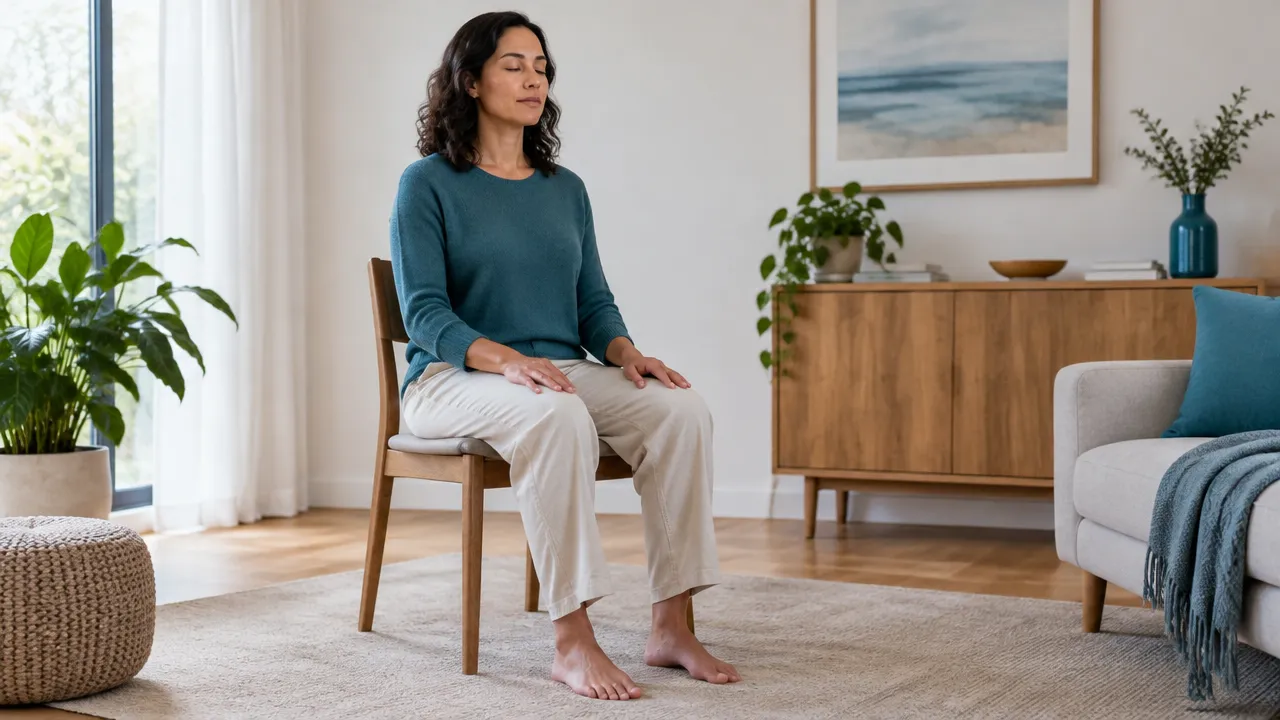
For the first week, try the same time and length each day if your schedule allows. The aim is not to achieve a flawless session, but to practise returning. If sitting still is uncomfortable, adjust your chair or posture; if the room is busy, a few quiet repetitions may still be possible.
What if your mind wanders or the practice feels uncomfortable?
Mind-wandering is normal, and noticing it gives you the chance to return to your phrase. Try shortening the session, repeating the words more clearly, or sitting with your eyes open. If the phrase starts to feel mechanical, slow down and consider whether a different word or a breath-focused practice suits you better.
There is no need to force concentration or judge yourself for being distracted. If meditation increases distress, stop and orient to your surroundings; you can try a different practice or seek guidance from a qualified professional. Research on meditation does not establish that every method is helpful for every person, and mental health symptoms deserve appropriate care.
Over time, the value may show up beyond the session: a small pause before replying, a moment to notice emotion, or a more deliberate choice in a tense interaction. That is a modest but meaningful form of inner attention in a world where personal reactions can ripple outward.
Frequently asked questions
What is a mantra?
A mantra is a word, sound, or short phrase repeated to give attention a steady focus. It may be sacred within a particular tradition, or it may be a simple personal cue such as “here.” The meaning depends on its cultural context and how the practitioner uses it.
How can I start chanting a mantra?
Choose a word or phrase, sit comfortably, and repeat it quietly for five minutes. When your attention wanders, notice that it has wandered and return to the words without criticism. You can say the mantra aloud, whisper it, or repeat it silently. Start with a short, manageable session.
What mantra should I chant every day?
There is no single phrase everyone should use daily. Choose one that feels comfortable, easy to remember, and meaningful to you, or learn a traditional mantra with its cultural and spiritual context. A neutral word such as “calm” or “steady” can also serve as a simple attentional anchor.
What is the most powerful mantra?
There is no universally most powerful mantra, and claims that one phrase guarantees healing or success are not established by meditation research. A useful mantra is one you can repeat comfortably and understand. Traditional phrases may carry specific meanings, so learn their context rather than treating them as interchangeable sounds.
Do I have to chant a mantra out loud?
No. You can repeat a mantra silently, whisper it, or say it aloud, depending on what feels comfortable and practical. Silent repetition works well in shared spaces, while speaking softly may help some beginners stay attentive. The core practice is returning to the phrase, not producing a particular sound.
Can mantra meditation treat anxiety?
Mantra meditation may support stress management, but it is not a guaranteed treatment for anxiety. A 2022 review found small-to-moderate improvements across some mental health outcomes, while noting important evidence limits. If anxiety is persistent or disruptive, consider speaking with a qualified health professional rather than relying on meditation alone.