

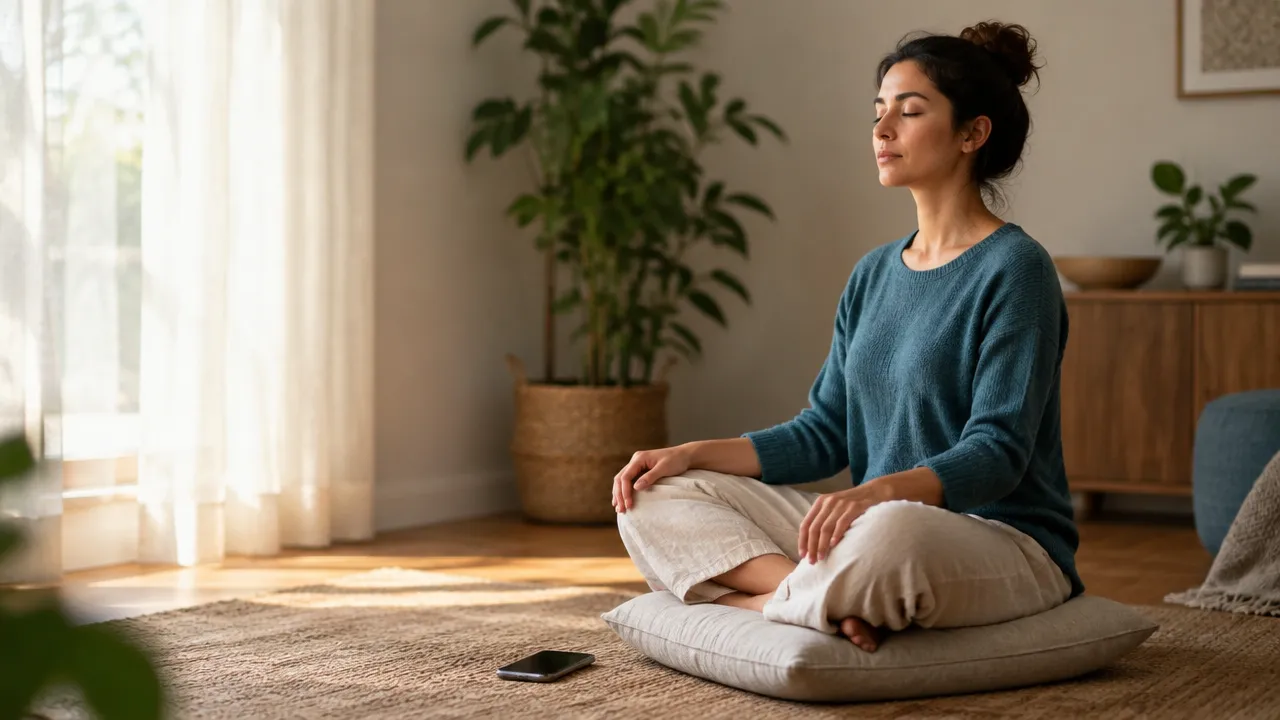
Guided meditation uses spoken instructions to help you direct attention toward breathing, body sensations, or another chosen focus. It can make starting easier, but staying focused does not mean having no thoughts. The useful skill is noticing when attention drifts and returning without criticism.
For a beginner, a short, familiar recording and a simple plan are usually more helpful than searching for a perfect session. Treat the guide as support for your attention, not a scorecard for how well you meditate.
Key takeaways for starting a guided practice
- Begin with five to ten minutes, then adjust based on how the session feels.
- Pick one clear intention, such as following the breath or easing into a break.
- Expect your mind to wander; each gentle return is part of the practice.
- Choose a recording whose pace and voice feel comfortable, not distracting.
- Build consistency with a realistic time and place rather than relying on motivation.
What makes guided meditation easier to begin?
A guided session gives your attention a sequence to follow. The speaker might invite you to notice sounds, feel your feet on the floor, or follow a few breaths. This structure can be useful when silence feels uncertain or when you are not sure what to do after sitting down.
Choose a recording based on the kind of support you want. A body scan offers a sequence of sensations to notice; a breath-focused session gives you one recurring anchor; and a visualization asks you to imagine a scene. If you are curious about how different approaches fit into a broader practice, this beginner’s guide to meditation offers another starting point.
Keep the first attempt uncomplicated: sit somewhere reasonably comfortable, silence notifications, and use a recording with clear instructions. A university-hosted collection, such as UC San Diego’s mindfulness resources, can be one place to explore guided audio.
How should you choose a session length and focus?
Start with a session short enough that you can finish without watching the clock. Five minutes is a practical trial, not a requirement or a measure of progress. If you feel settled and want more time, gradually try a longer recording on another day.
| Your situation | Try this format | What to notice |
|---|---|---|
| You are new to meditation | A short breath or body-awareness practice | Whether the instructions are clear |
| You feel mentally scattered | A simple, repeated breathing cue | How easily you can return to one anchor |
| You are winding down | A slow body scan or gentle relaxation track | Whether the pace feels soothing, not demanding |
These are options, not prescriptions. If music, visual imagery, or frequent prompts pull your attention away, try a quieter recording. You can also compare what helps you sustain attention in different environments using these strategies for meditative focus.
How do you stay focused when your mind wanders?
Let the voice guide you back without demanding uninterrupted concentration. Thoughts, plans, and sounds may appear during a session. The moment you recognize that your attention has drifted is the moment you can gently reconnect with the breath, a body sensation, or the speaker’s next cue.
- Notice: Recognize that attention has moved, without judging yourself.
- Choose: Return to the focus named in the recording.
- Continue: Follow the next instruction, even if your attention wanders again.
If a prompt feels confusing, pause the audio and take a breath. If you feel uncomfortable, you can open your eyes, change position, or stop. A session is a practice you can adapt, not an instruction you must obey.

How can you make meditation a steady habit?
Attach meditation to a routine you already have, such as sitting after breakfast or taking a short pause before starting work. Keep the cue, place, and recording simple enough to repeat. A small practice you return to is more workable than a long session that feels like another obligation.
Plan for interruptions rather than treating them as failure. If you miss a day, restart with the next realistic opportunity instead of trying to make up for it. If your routine has slipped before, these ideas for restarting a meditation practice can help you make the return manageable.
After each session, take a few seconds to note what you tried and whether the length, voice, or focus suited you. This simple reflection helps you make a more intentional choice next time, rather than chasing a vague idea of a perfect meditation.
A two-minute script to try now
Sit or stand in a comfortable position and let your eyes rest or close. Notice the support beneath you. Feel one breath arrive, then leave. When a thought or sound catches your attention, name it silently as “thinking” or “hearing,” and return to the next breath. Before finishing, notice how your body feels and choose one small next step in your day.
Frequently asked questions
What is the best free guided meditation?
The best free guided meditation is one you can follow comfortably and return to regularly. Try a short session with a clear voice and few sound effects, such as an introductory recording from a university mindfulness library. Choose a topic that fits your aim, then notice whether the instructions feel supportive rather than distracting.
How much does guided meditation cost?
Guided meditation may be free through public audio libraries, or included with a paid app, class, or teacher’s program. Before subscribing, try a sample and check whether the voice, pace, and instructions work for you. You do not need expensive equipment; a quiet place and a phone or computer are enough.
What's the best time to meditate?
The best time to meditate is a time you can protect consistently. Morning may suit people who want a calm start, while a break or evening session may fit better around work and family. Try the same time for several days, then adjust if you feel rushed, sleepy, or distracted.
What happens after 40 days of meditation?
After 40 days, you may find that sitting down to practice feels more familiar, but there is no guaranteed transformation or fixed timetable. Your experience depends on the length and regularity of sessions, the approach you use, and what is happening in your life. Track small observations instead of expecting a specific result.
How do I stay focused during guided meditation?
Stay focused by treating the narrator’s cue as an invitation to return, not a test you must pass. When your mind wanders, notice the thought, reconnect with a physical sensation such as breathing, and listen for the next instruction. If the recording feels too fast, choose a shorter session or pause it.