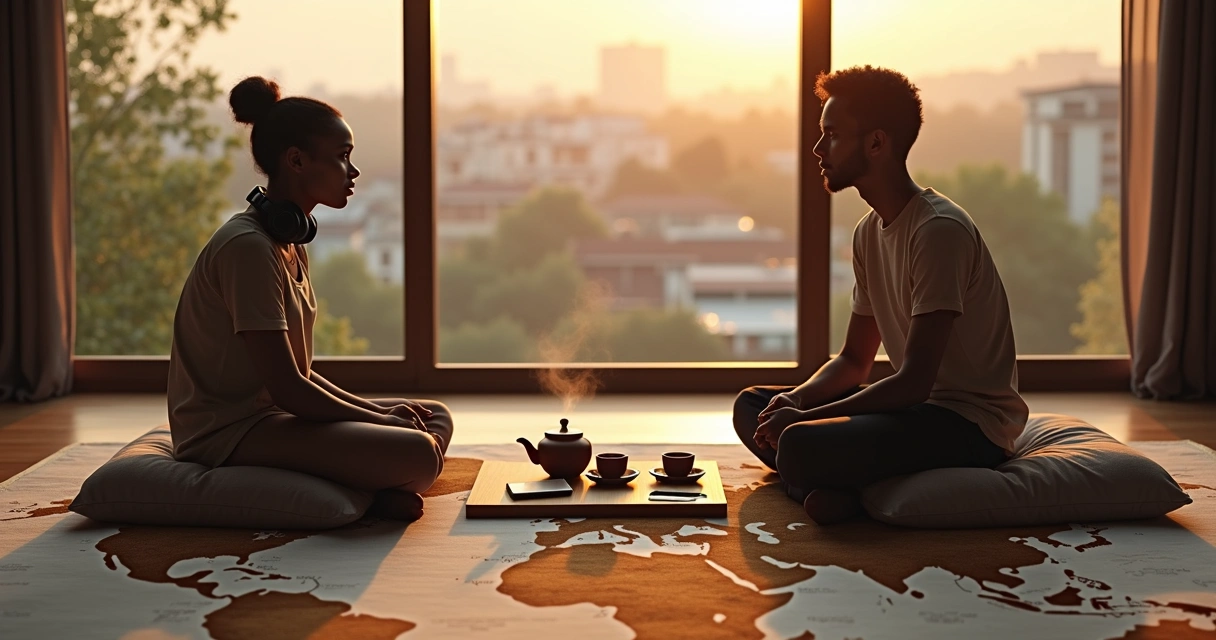
When we first notice global privilege, the feeling can be sharp. We may see that where we were born, the passport we hold, the language we speak, or the money we can access has opened doors that stay closed for many others. That realization can stir guilt. Sometimes shame too. Yet guilt, by itself, rarely changes much.
Global privilege is not a personal crime, but it is a personal responsibility.
We think this is where a more mindful path begins. Not in denial. Not in self-punishment. In honest awareness. If we stay stuck in guilt, we often become passive, defensive, or performative. We talk a lot. We help a little. We center our feelings when the issue is much larger than us.
In our experience, mindful reflection helps us face unequal systems without collapsing under them. It helps us ask better questions. What advantages do we carry? How do they shape our daily choices? Where can we act with more fairness, more humility, and more care?
Seeing privilege clearly
Privilege can sound abstract until we bring it close. It includes access to safety, education, stable income, healthcare, time, digital tools, and social trust. Some forms are visible. Others are quiet. A person may not feel wealthy in their own city and still benefit from a powerful global position.
That is not a small point. Data on global wealth show just how uneven the world remains. Figures on global inequality report that in 2023 the richest 1% owned about 47.5% of global wealth, while nearly 40% of adults with less than $10,000 held less than 1% of global wealth. When we sit with numbers like these, privilege stops being just a moral idea. It becomes a lived structure.
Awareness must become action.
We also need to see that privilege is layered. A person can face pain in one part of life and still hold advantage in another. This is why mindfulness matters here. It slows our urge to simplify. It keeps us from turning complex realities into quick labels.
Why guilt keeps us stuck
Guilt has a role. It can wake us up. It can signal that our values and our habits are out of sync. But if guilt becomes our home, it drains courage. We may start thinking in ways that sound moral but hide fear, such as staying silent because we do not want to say the wrong thing, or making symbolic gestures that cost us nothing.
We have seen this pattern often. A person learns about inequality, feels shaken, posts one thoughtful message, donates once, and then pulls away because the discomfort is too much. The inner story becomes, “I feel bad, so I must care.” But feeling bad is not the same as helping.
Mindful responsibility asks more from us than emotional discomfort.
There is another risk. Guilt can become self-focused. We start asking whether we are good people rather than whether our choices support a fairer world. That shift is subtle, but it changes everything.

Mindful ways to respond
A better response starts with attention. We pause long enough to notice what rises in us, then we choose a grounded next step. This is slower than guilt, but it goes further.
We suggest a practice built on four moves:
- Notice your reaction without judging it too fast.
- Name the advantage as clearly as you can.
- Ask who benefits, who is excluded, and who pays the cost.
- Take one concrete action that matches the insight.
That action does not need to look grand. In fact, steady actions often do more than dramatic ones. We can redirect part of our spending toward fairer supply chains. We can support local workers and community groups. We can question workplace habits that reward some voices and ignore others. We can also learn from reliable long-term data. Cross-country income inequality data help us see that unequal outcomes are not random accidents. They repeat across places and across time.
Sometimes the work becomes personal in a very quiet way. We might notice how easy it is for us to travel, open a bank account, speak and be heard, or recover from a setback because family support exists. A mindful person does not deny these cushions. We acknowledge them. Then we ask how to share access, lower harm, and widen dignity.
From private reflection to public action
Mindfulness is not only inward. It should shape how we show up in systems. This matters because inequality is not created by attitude alone. It is built through policy, history, labor conditions, and wealth concentration.
In the United States, research on rising wealth inequality since the 1980s shows that the top 1% wealth share grew from around 25 to 30% in the 1980s to about 40% by 2016. When we look at patterns like this, it becomes clear that personal kindness, while good, is not enough by itself.
So what can public action look like?
- Support policies that widen access to housing, health, education, and fair wages.
- Vote with attention to how decisions affect the most exposed groups.
- Give time, money, or skill to groups doing direct community work.
- Question institutions we belong to, including schools, workplaces, and local networks.
We think one honest sentence can shift a room: “This works well for people like me, but who does it leave out?” It is simple. It is direct. And it opens space.
Privilege asks for service, not silence.

Practices that keep us grounded
Without grounding, this topic can become heavy. We may swing between avoidance and overexposure. A mindful rhythm helps us stay present and useful.
We often return to a few simple habits:
- Take five minutes of quiet breathing before reading distressing global news.
- Journal about one advantage you used that day and one way to share its benefit.
- Listen longer in conversations with people whose conditions differ from yours.
- Set a regular giving plan, even if it starts small.
- Review purchases and ask what labor, land, or communities made them possible.
Mindful practice turns privilege from a hidden benefit into a conscious obligation.
We do not need purity. We need steadiness. There will be blind spots. There will be moments when we notice too late. That is part of growth. The point is not to become spotless. The point is to become more awake and more accountable.
Conclusion
Moving beyond guilt does not mean becoming comfortable with inequality. It means refusing to stop at emotion. We can face global privilege with honesty, let it humble us, and still act with clarity. That is a stronger response than shame.
When we understand that our comfort may be linked to uneven systems, we are invited into a mature form of attention. We do not shrink. We do not pretend. We become more responsible in how we buy, vote, speak, share, and listen. Little by little, inner awareness starts to shape outer life. That is where mindful change begins.
Frequently asked questions
What is global privilege?
Global privilege is the set of advantages a person has because of where they were born, the resources they can access, their nationality, education, income, race, language, or social position. These advantages often make life safer, easier, and more stable than it is for many others across the world.
How to practice mindfulness with privilege?
We practice mindfulness with privilege by noticing our reactions without denial, naming the advantages we hold, and linking awareness to action. This can include quiet reflection, honest journaling, careful listening, and making daily choices that reduce harm and widen fairness.
Why move beyond guilt about privilege?
Guilt can wake us up, but it often keeps attention on our feelings. Moving beyond guilt helps us shift from self-focus to responsibility. That creates more room for steady action, better decisions, and deeper care for people affected by unequal systems.
How can I help reduce global inequality?
We can help reduce global inequality by supporting fair wages, backing policies that widen access to basic needs, donating to trusted community efforts, and questioning unfair systems in our workplaces and local institutions. Even small actions matter when they are regular and sincere.
What are mindful actions for global justice?
Mindful actions for global justice include paying attention to who is excluded, learning from reliable inequality data, spending with care, listening across difference, and sharing time, money, or influence in ways that support dignity and access. The mindful part is staying aware of impact while acting with humility.