
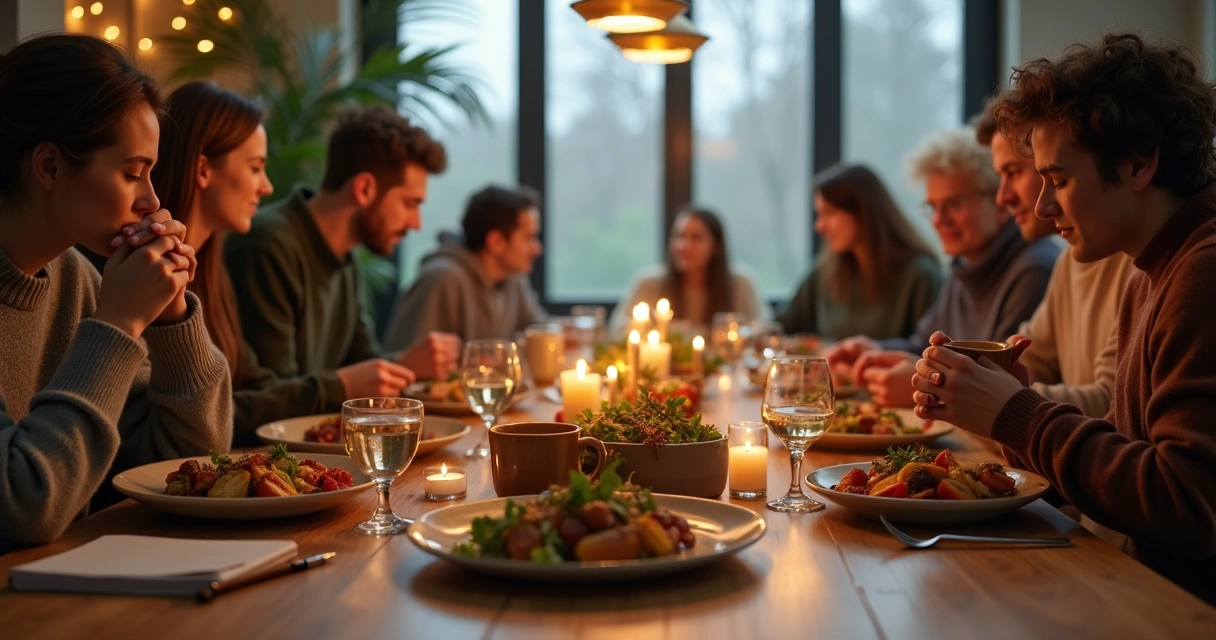
Holiday gatherings can still feel warm and joyful in 2026. They can also feel crowded, costly, noisy, and tense. Many of us walk into a family meal or party carrying more than a dish or a gift. We carry unfinished conversations, tight budgets, social pressure, and tired minds.
We see this every year. A person smiles at the door, then freezes in the kitchen after one loaded comment. Another keeps checking the phone, not from rudeness, but from stress. It happens fast.
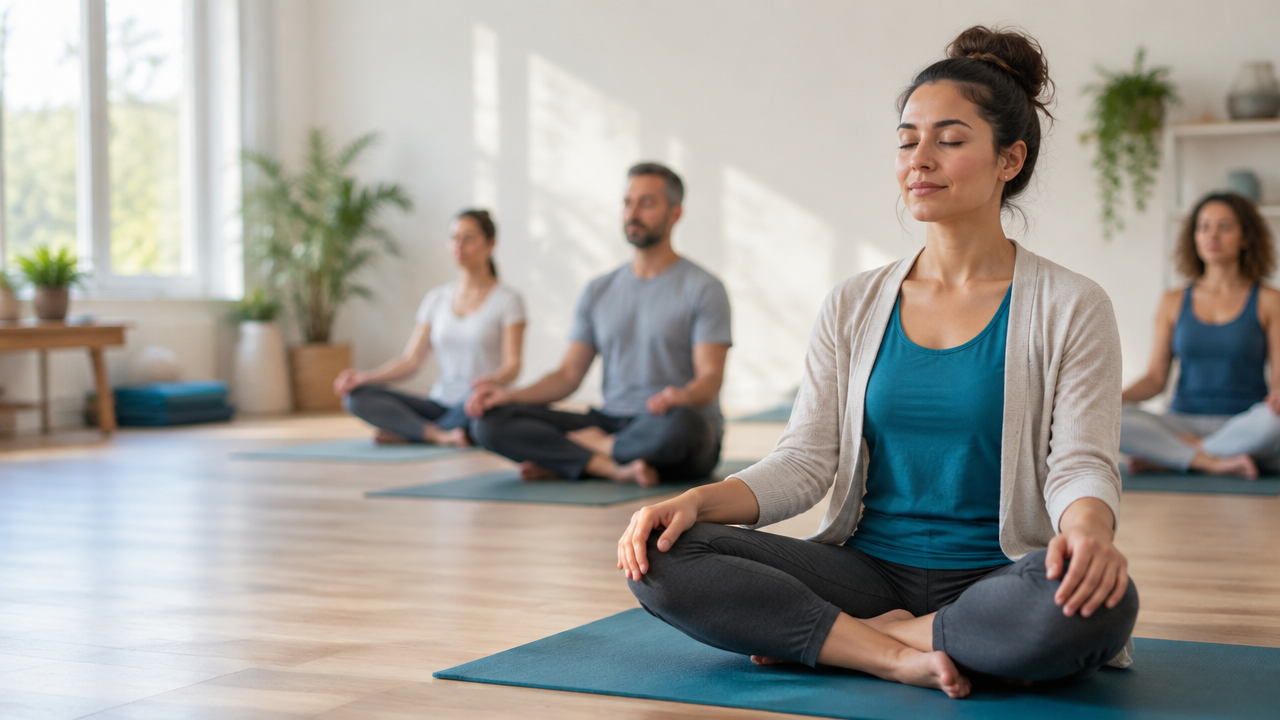
Mindfulness helps us meet holiday gatherings as they are, instead of fighting the moment from the inside.
That matters now. A November 2023 survey from Ohio State University Wexner Medical Center found that 75% of respondents felt stress from rising prices and holiday spending, 81% felt stress from national or world affairs, and 44% felt stress from memories of past travel problems. So if gatherings feel heavier than they used to, many of us are not imagining it.
Here are nine grounded ways we can move through them with more calm, honesty, and care.
1. Set an intention before we arrive
Before we enter the room, we can pause for one minute and choose our inner direction. Not a perfect script. Just a simple intention.
We might say to ourselves:
I want to stay kind, even if I disagree.
I want to listen more than I explain.
I want to protect my peace without shutting people out.
This gives the mind a place to return to when the room gets loud. We have seen how one clear sentence can steady an entire evening.
Pause before presence.
2. Arrive with room in our schedule
Rushing makes us reactive. When we arrive late, hungry, and tense, almost anything can feel like a personal attack. A small delay in traffic becomes irritation. A harmless joke feels sharp.
When possible, we can give ourselves a buffer before the event. That may mean getting dressed earlier, eating a light snack, or sitting in the car for a few quiet breaths before going in.
A calm arrival often shapes the tone of the whole gathering.
We do not need a long ritual. Even three slow breaths can lower the sense of inner pressure.
3. Notice our body before our words
Holiday stress often shows up in the body first. Tight jaw. Fast speech. Shallow breathing. Raised shoulders. Warm face. We may think the issue is another person, when the first signal is already inside us.
One practice we like is a quick body check at natural breaks, such as when we wash our hands, refill a glass, or step into another room. We can ask:
What is happening in my chest?
Am I clenching my hands?
Do I need one slower breath before I answer?
That short check interrupts automatic reactions. It gives us a choice.

4. Keep boundaries simple and clear
Mindfulness is not passive. It does not ask us to absorb every comment with a polite smile. Sometimes the wisest choice is a clear boundary spoken without heat.
If a topic always becomes harmful, we can prepare one or two calm lines in advance. For example:
I would rather not discuss that tonight.
We see this differently, so I am going to leave it here.
I want to keep this evening peaceful.
Short works better than long. When we overexplain, we often reopen the door to conflict. A boundary does not need a speech.
Clear boundaries protect connection when a conversation is starting to damage it.
5. Listen for feelings, not only opinions
At many gatherings, people speak in conclusions. They sound firm, but under the surface there may be fear, grief, loneliness, or a need to be seen. If we hear only the opinion, we miss the human signal beneath it.
This does not mean we agree with everything said. It means we listen with more depth. An older relative repeating the same complaint may really be asking, in an awkward way, if anyone still values their presence. A stressed parent may sound controlling when they are actually overwhelmed.
We have found that responses soften when we answer the feeling. Sometimes a simple sentence changes the room: “It sounds like this year has been hard for you.”
6. Use mindful exits instead of forced endurance
There are moments when staying in the room is not wise. Many of us were taught that leaving even briefly is rude. Yet stepping away can prevent a worse scene later.
A mindful exit can be quiet and respectful. We can:
Offer to help in another room.
Step outside for fresh air.
Take a short walk around the block.
Spend two minutes in the restroom breathing slowly.
This is not avoidance when done with awareness. It is self-regulation. Sometimes peace returns after five minutes of space.
Stepping away can be wisdom.
7. Let one moment be enough
Many people put pressure on holiday gatherings to heal old pain, prove family closeness, or create perfect memories. That weight is too heavy for one meal. When reality falls short, disappointment grows fast.
We think it helps to lower the emotional demand we place on the event. Maybe this gathering will not resolve years of distance. Maybe it will simply offer one decent conversation, one real laugh, or one gentle goodbye. That is still meaningful.
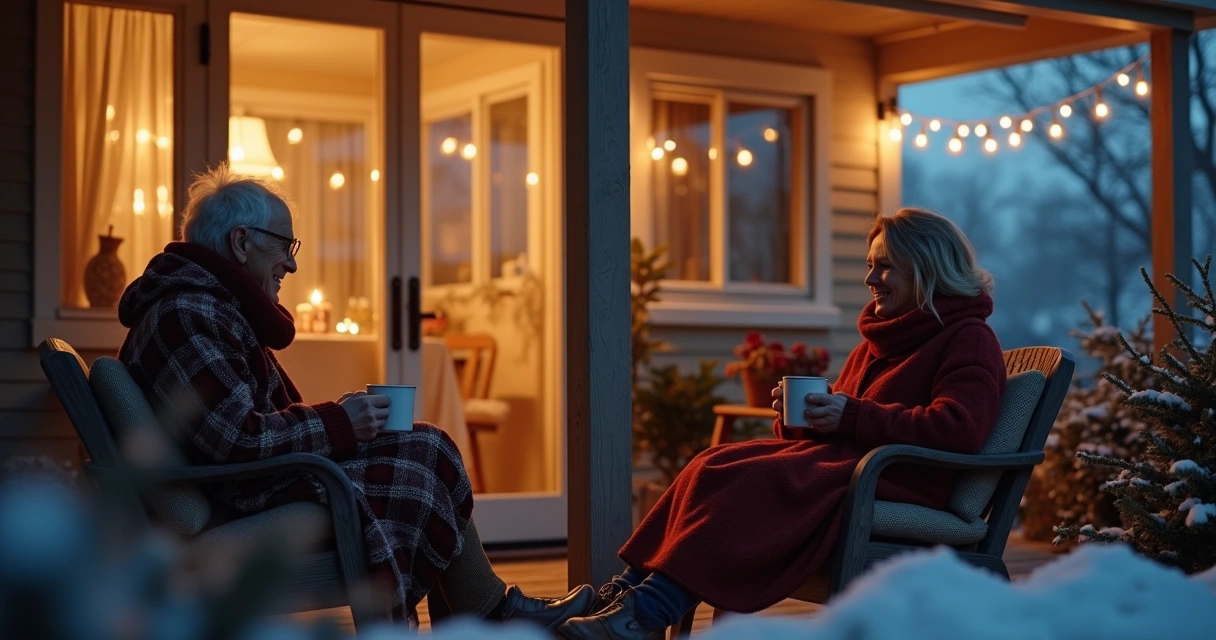
We once heard someone say after a tense dinner, “At least we had ten good minutes on the porch.” That stayed with us. Those ten minutes were real. They counted.
8. Practice gratitude without denying hard feelings
Gratitude can steady us, but only when it is honest. If we use it to silence pain, it turns stiff and unreal. We do not need to pretend everything is lovely when it is not.
Instead, we can hold both truths at once. The day may be tiring, and we may still feel thankful for one person, one meal, or one small act of care. That balanced view keeps us present.
We might silently name three things that are true in the moment:
This is harder than I hoped.
I am staying with myself.
There is still something good here.
That kind of gratitude feels grounded. Not forced. Not thin.
9. Debrief with compassion after the gathering
When the event ends, many of us replay everything we said and did. We judge ourselves for being too quiet, too blunt, too sensitive, or not cheerful enough. That habit extends the stress long after the chairs are empty.
Instead, we can reflect with kindness. A few questions help:
What helped me stay present?
Where did I lose my center?
What do I want to do differently next time?
This turns the gathering into practice, not proof of success or failure. We are learning. That matters.
Conclusion
Holiday gatherings in 2026 do not ask us to be perfect. They ask us to be present enough to notice what is happening inside and around us. When we set an intention, protect our limits, and listen with care, we change the tone of the experience. Maybe not for everyone. But for ourselves, and often for the room as well.
Mindful gatherings are not the ones without tension, but the ones where we meet tension with steadiness.
If this season feels full, we can take one of these nine ways and practice only that. One breath. One boundary. One pause before one reply. Sometimes that is where peace begins.
Frequently asked questions
What is mindful gathering for holidays?
A mindful holiday gathering is a social event where we stay aware of our thoughts, feelings, body signals, and reactions while being with others. It means we join the event with more presence, clearer limits, and less automatic behavior.
How to handle holiday stress mindfully?
We can handle holiday stress mindfully by slowing down before events, noticing body tension early, keeping expectations realistic, and taking short breaks when we feel overloaded. Simple breathing and quiet pauses often help more than trying to control every situation.
What are mindful tips for family gatherings?
Helpful mindful tips include setting an intention before arriving, eating and resting ahead of time, listening without rushing to defend ourselves, using short boundary statements, and stepping away for a few minutes if emotions rise. These small actions support calmer interactions.
How can I avoid conflict at parties?
We can reduce conflict by not taking every invitation to argue, avoiding known trigger topics when possible, speaking briefly and clearly, and leaving heated conversations early. It also helps to respond to the feeling behind a comment instead of reacting only to the words.
Is mindfulness useful for holiday events?
Yes. Mindfulness is useful for holiday events because it helps us regulate stress, stay present, and choose our responses with more care. It does not remove every hard moment, but it can keep one hard moment from turning into a painful evening.