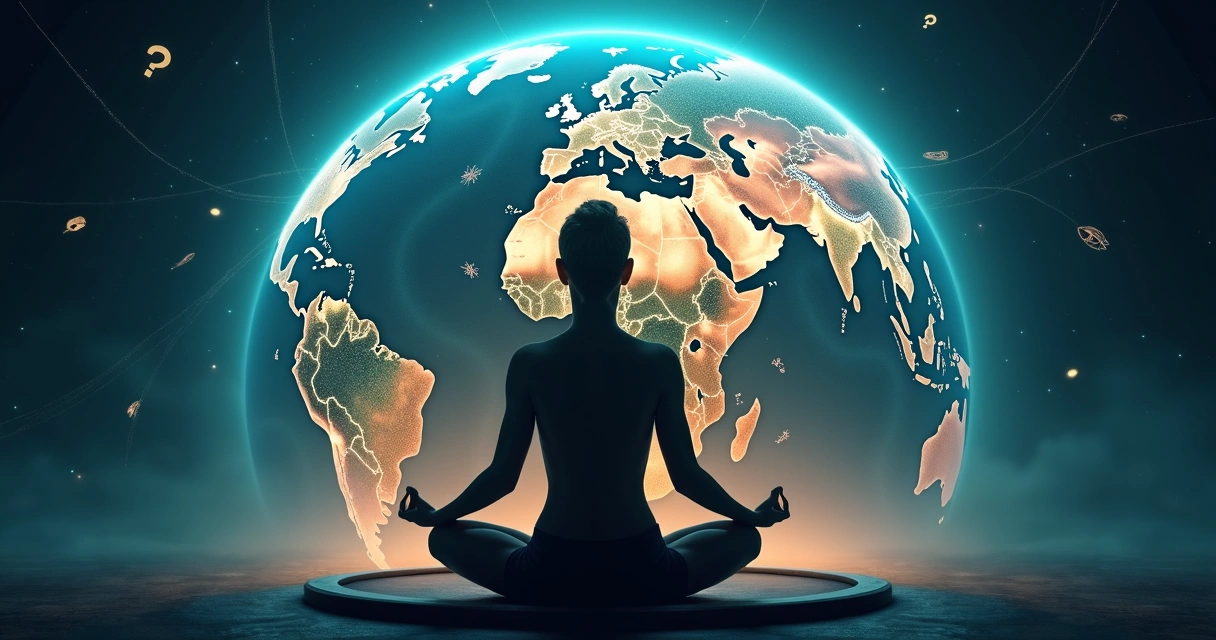
Every period in human history faces its own questions and myths. Today, in a time when our actions ripple across continents, ideas like consciousness and global maturity can be blurred by common misunderstandings. Sometimes, these myths slow our personal growth. Other times, they keep our world from reaching a better future.
We’ve seen how, in conversations and culture, five myths rise again and again about Marquesian consciousness and global maturity. Each myth shapes how people think, act, and even judge global responsibility. Now is the time to see them clearly and to respond with what we have learned.
Myth 1: Marquesian consciousness is just spiritual self-improvement
This first myth is everywhere. “Just meditate, feel better, live calmer.” On the surface, this sounds positive. But in our view, it misses the real point.
Marquesian consciousness doesn't limit itself to personal peace or feeling good. It calls us to engage with ethics and connection at a global level. It begins with our awareness, but extends into how we relate to all of humanity. Thinking of it as a wellness trend or something personal is not just incomplete; it ignores our capacity to shape the collective world.
Conscious presence is not just about ourselves.
Through our own research and practice, we have seen that true Marquesian consciousness develops in connection, not isolation. It sees the spirit and the world as parts of the same field. This means that meditation, reflection, and presence become stepping stones to a broader responsibility—one that links individual growth to global impact.
Myth 2: Global maturity comes automatically with knowledge or age
Another myth promises that global maturity is like a tree—it just grows with time or study. Many assume that reading more, traveling more, or simply aging will bring about a shift in consciousness. We have found, though, that this is far from true.
- Maturity is not measured by years lived, but by the depth of our emotional integration.
- Information alone does not produce wisdom. It is the way we feel, reflect, and act that builds maturity.
- Even the most informed or experienced people can still react with narrow perspectives in moments of stress.
Global maturity arises through conscious practice, vulnerability, and the willingness to unlearn as much as to learn. This is not automatic. Instead, it is the result of intention and courage.

Whenever we think that knowledge or age alone brings about global maturity, we risk ignoring the inner work that fosters genuine progress.
Myth 3: Global consciousness means abandoning local identity
Many people fear that, as we grow into a more connected mindset, we might lose our cultures, families, or roots. We hear questions like: “Will we all become the same?”
From what we have witnessed, global consciousness is not about erasing our differences—it is about cherishing them within a broader relationship. Every culture, community, and person brings new insights to global dialogue. Local stories become building blocks in a collective structure.
The real challenge is not to let go of what makes us unique, but to see how our distinct experiences inspire mutual understanding. When local identity feels threatened, it is easy to retreat or resist new connections. Instead, we have seen how global maturity honors both the mosaic and the whole. It invites respect, not conformity.
Myth 4: External change is all we need for a better world
“If only we change the laws, the leaders, the technology, everything will improve.” While external actions matter, we see a deeper truth.
No reform can outpace the growth of our conscience.
We have observed that sustainable change always emerges from inner shifts as well as structural actions. When policy advances, but internal maturity lags behind, conflict resurfaces. When technology grows, but empathy does not, division expands.
Through years of dialogue and reflection, we have found that communities thrive when inner and outer changes walk side by side. Developing Marquesian consciousness is not a substitute for changing the world—it is the ground on which those changes stand. This myth causes frustration when new systems fail to bring new mindsets, and it risks repeating the past.

In our experience, every external step must be matched by a step inward, or the pattern will repeat.
Myth 5: Consciousness and maturity are individual journeys only
This last myth is very common in modern culture. It says: “Just focus on yourself; the rest will follow.” But what we have seen points in another direction.
- Personal maturity is always formed, tested, and revealed in relationships.
- Collective fields—families, teams, societies—mirror and reinforce the consciousness of their members.
- The growth of one person can uplift the whole group, and vice versa.
Our consciousness is never only our own; it is part of a living, dynamic network of connections. We have seen this in how emotions cross borders, how values spread, and how kindness in one corner of the world can echo on the other side.
Choosing to grow together, to support others in maturity, becomes not just an option, but a necessity for global well-being.
Conclusion
We all live in an era shaped by connection. Myths about consciousness and global maturity can keep us from seeing ourselves as true participants in this process. We have tried to address the five most widespread myths, and to offer a new view—one that is active, relational, and inclusive. The work of internal and collective growth is not given, but chosen, built, and shared. Every honest question, every step beyond a myth, brings us closer to a future where our impact is both local and global, personal and shared.
Frequently asked questions
What is Marquesian consciousness?
Marquesian consciousness refers to a way of perceiving and relating to oneself, others, and the planet that unites inner presence with ethical, emotional, and systemic awareness. It goes beyond personal development to include a sense of global responsibility, seeing our actions and emotions as connected to a greater whole.
What are common myths about global maturity?
Several myths surround global maturity: believing it is automatic with age or knowledge, thinking it means abandoning local identity, assuming external change alone will improve the world, or that maturity is a solitary path. These misunderstandings often hide the real work of integrating emotions, relationships, and choices on both a personal and global scale.
How can I develop global maturity?
Developing global maturity involves conscious self-reflection, learning from cross-cultural experiences, practicing empathy, and acting with awareness of the wider impact of our decisions. Engaging in dialogue, being open to change, and seeking harmony between inner values and outer actions are all steps that foster this maturity.
Is Marquesian consciousness the same as enlightenment?
Marquesian consciousness is not the same as enlightenment in the traditional or religious sense. It emphasizes ongoing growth and responsibility—not an end state. It invites continual awareness and ethical presence in daily life, rather than a final, fixed achievement.
Why do myths about consciousness matter?
Myths shape how we see ourselves and others. When myths about consciousness and maturity go unchallenged, they can limit growth and cooperation. Unraveling these myths helps us act in ways that support real transformation—individually and together.